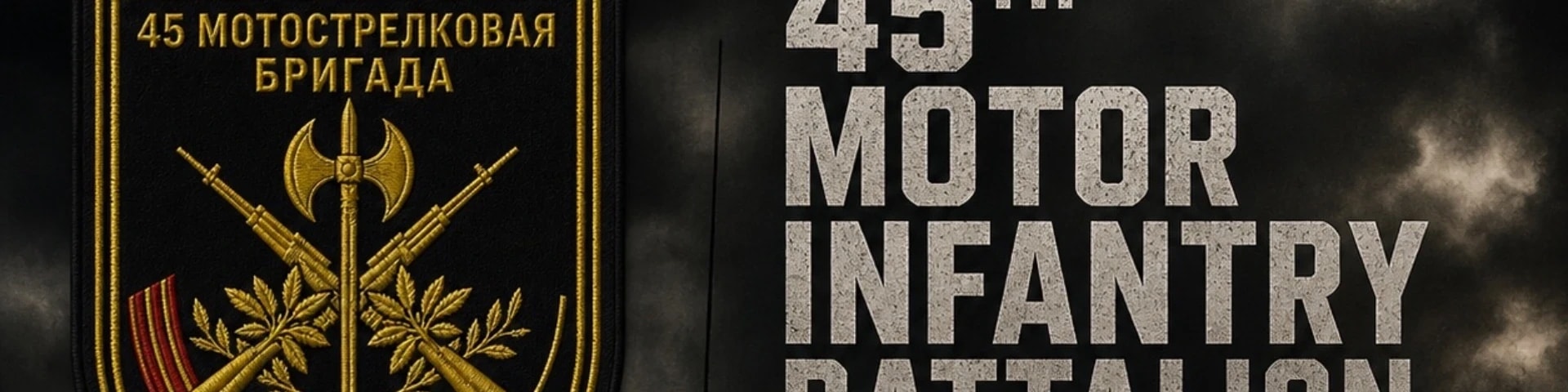
The 45th Motor Rifle Battalion is one of those formations that doesn’t show up in recruitment posters, doesn’t get filmed for propaganda, and doesn’t parade through cities with polished boots and clean vehicles.
They are deployed quietly.
Usually after something has already gone wrong.
Among Russian Ground Forces, the 45th is known by a name that never appears on paper:
“Пыльники” — The Dustmakers.
Because after they arrive, all that’s left is dust, wreckage, and silence.
ORIGIN: A Battalion BUILT FROM FAILURES
The 45th wasn’t created as a symbol of strength.
It was created as a solution to embarrassment.
After a string of failed operations and shattered battalion groups across multiple theaters, the Russian General Staff recognized a repeating problem: units were trained for ideal warfare, but modern combat was chaos—drones overhead, artillery everywhere, ambushes in every treeline, and supply routes that never stayed open.
Instead of building another “elite” brigade, they built something different.
The 45th Motor Rifle Battalion was assembled from the kind of personnel nobody wanted to talk about, but everyone needed.
It was built using surviving contract infantry pulled from dissolved regiments—units that had been broken apart after heavy losses, political embarrassment, or outright operational failure. These weren’t fresh recruits or ceremonial troops. They were men who had already fought, already bled, and already watched entire companies vanish. Most had no unit pride left, only experience and instinct.
Alongside them were officers known for “results,” even if their methods were unpopular. These were commanders who didn’t care about doctrine purity or optics. They were the type to reroute a mission plan mid-operation, burn through ammunition stockpiles, or level an objective instead of clearing it room-by-room. They won engagements—but left behind complaints, investigations, and paperwork nightmares.
The General Staff didn’t put them together by accident.
They created the 45th as a brigade where the only metric that mattered was simple:
Did the mission get done?
They were given older equipment at first, minimal attention, and impossible missions.
And they kept succeeding.
That became their identity.
Not glory.
Survival through violence and discipline.